
Long before Asheville became a destination for mountain adventures, celebrated restaurants, craft breweries, and a thriving arts scene, the French Broad River was shaping the landscape and the lives of those who called these mountains home.
Winding north through the Blue Ridge Mountains, the French Broad is more than a beautiful waterway. It’s a connection to the region’s ancient geological history, Cherokee heritage, small mountain communities, and enduring outdoor traditions.
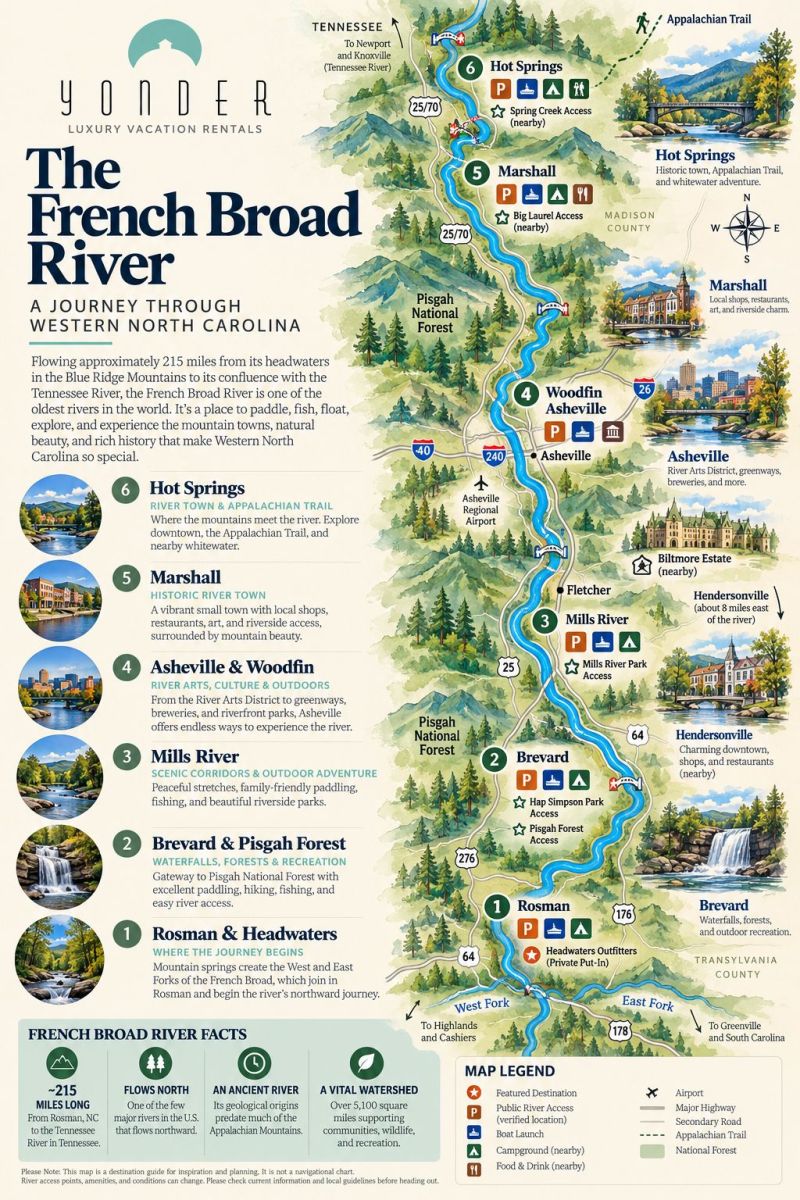
From its headwaters near Rosman to the artistic energy of Asheville and the historic mountain towns of Marshall and Hot Springs, the river tells a remarkable story of Western North Carolina.
Whether you’re paddling a peaceful stretch of water, exploring a riverside greenway, discovering a local restaurant, or simply admiring the scenery, following the French Broad River offers a wonderful way to experience the mountains.
Join Yonder Luxury Vacation Rentals as we explore the river that helped shape our region.
An Ancient River With a Remarkable Story
The French Broad River is often described as one of the oldest rivers in the world, with commonly cited geological estimates placing its origins hundreds of millions of years in the past. While its precise age is difficult to establish, its remarkable geological history predates much of the landscape we recognize today.
Unlike many rivers in the southeastern United States, the French Broad flows north. Beginning near Rosman in Transylvania County, it travels through Henderson, Buncombe, and Madison counties before crossing into Tennessee.
Eventually, its waters join the Holston River near Knoxville to form the Tennessee River, continuing through the Ohio and Mississippi river systems toward the Gulf of Mexico.
It’s an extraordinary journey for a river that begins among the quiet mountain streams of Western North Carolina.
A River of Many Names
Long before European settlers arrived, the river was central to Cherokee life and culture.
The Cherokee name Long Man reflects a deeply meaningful relationship with flowing water. The river was more than a means of transportation or a source of food; it held spiritual and cultural significance.
The name French Broad emerged during the colonial period, distinguishing the river from other waterways known as the Broad River and reflecting the French territorial presence farther west.
Today, the river remains an important part of the region’s cultural identity.
Rosman: Where the Journey Begins
Our journey starts in Rosman, a small Transylvania County community surrounded by the forests and mountains of the Blue Ridge.
Here, the North Fork and West Fork come together to form the French Broad River.
The landscape feels wonderfully intimate. Mountain streams wind through wooded valleys, farmland borders the water, and the river begins its northward journey.
Rosman is also home to Headwaters Outfitters, a longtime local outdoor adventure business offering opportunities to experience the river firsthand.
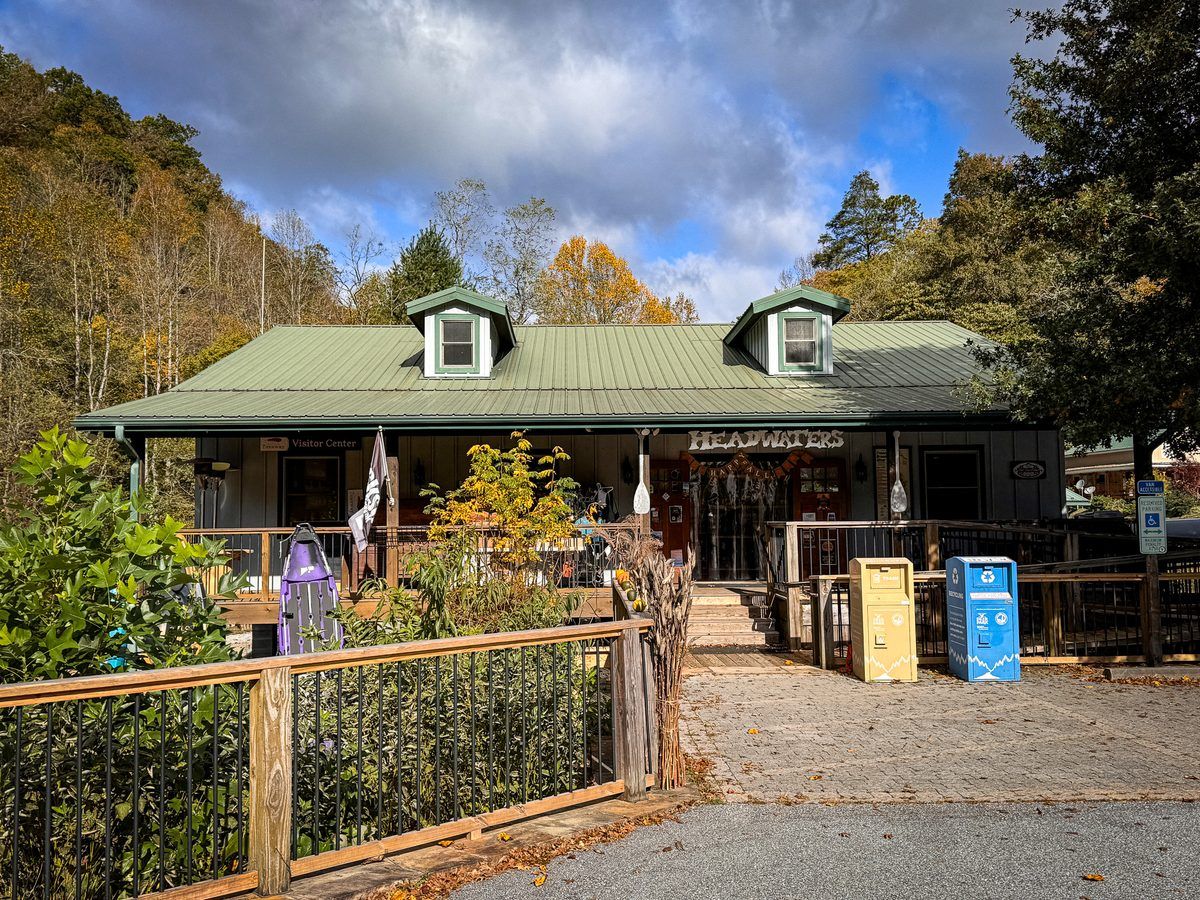
For visitors interested in kayaking, canoeing, or guided river experiences, the upper French Broad provides a memorable introduction to the region’s waterways.
Yonder tip: Pair a morning along the river with an afternoon exploring nearby Brevard, or venture into Pisgah National Forest for hiking and waterfalls.
Brevard and Pisgah Forest: A Gateway to Adventure
As the French Broad flows toward Brevard, the surrounding landscape opens into a beautiful combination of forested mountains, agricultural valleys, and peaceful riverbanks.
Brevard is known for its welcoming downtown, independent shops, restaurants, and proximity to some of Western North Carolina’s most celebrated outdoor destinations.
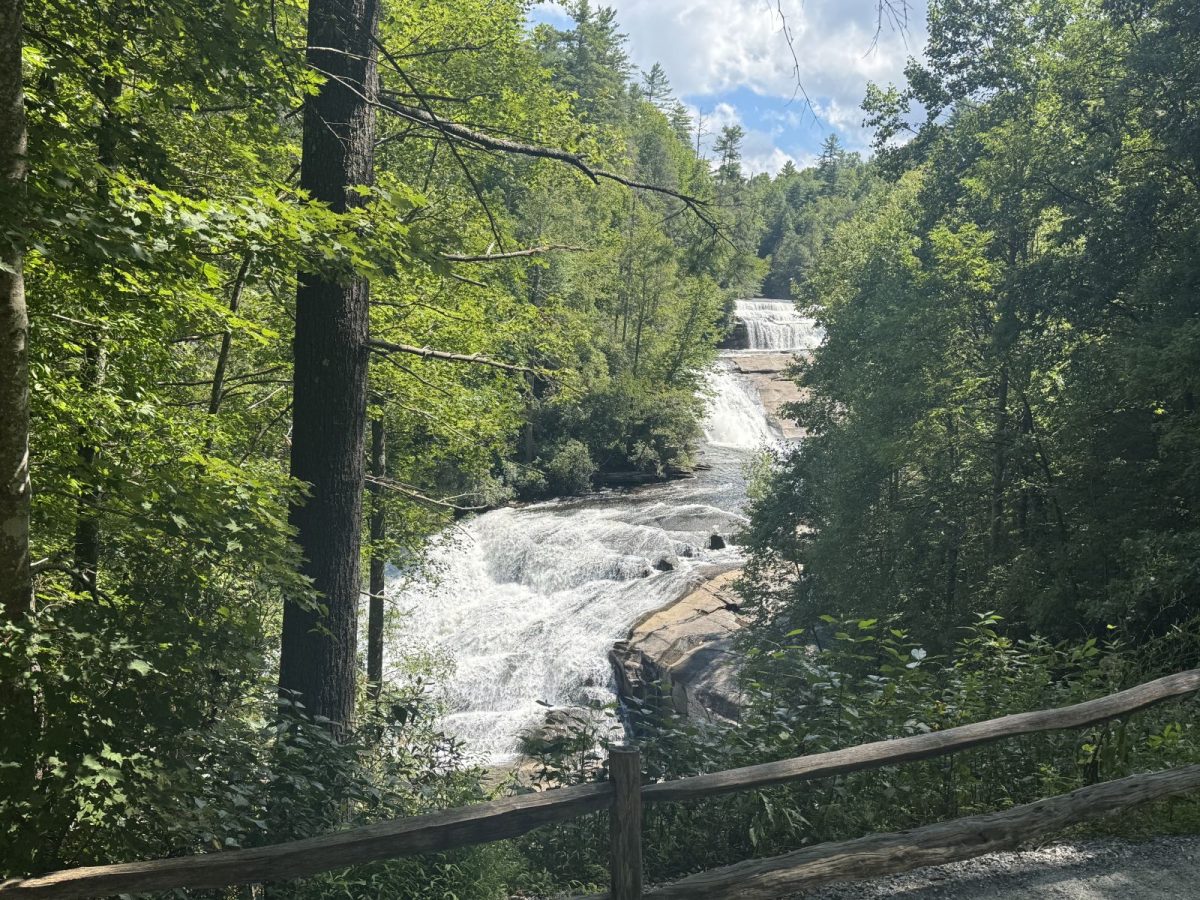
Nearby Pisgah National Forest offers waterfalls, hiking trails, mountain biking, and scenic drives.
The French Broad adds another dimension to the experience.
Visitors can enjoy paddling and fishing in designated areas or simply spend time appreciating the natural beauty of the river corridor.
Hap Simpson Park and Pisgah Forest River Access are among the established public access locations along this section of the French Broad.
And while Brevard is famous for its waterfalls, there’s something equally appealing about the quieter beauty of the river winding through the valley.
Henderson County and Mills River: The Scenic Middle Reaches
Continuing north, the French Broad travels through Henderson County, passing farmland, wooded riverbanks, and communities where the river has long influenced local life.
This section offers some of the river’s more relaxed scenery, making it particularly appealing to visitors seeking a peaceful outdoor experience.
Public access locations include Blantyre Park, Horse Shoe Boating Access, Lazy Otter River Access, and Westfeldt Park.
The nearby communities of Mills River, Fletcher, and Hendersonville offer opportunities to explore local food, breweries, shops, and mountain hospitality.
It’s worth remembering that not every destination in the broader French Broad watershed sits directly on the river. Hendersonville, for example, makes an excellent nearby excursion rather than a riverfront stop.
Yonder tip: This area makes a wonderful addition to a day exploring Hendersonville, local farms, and the scenic countryside between Brevard and Asheville.
Asheville: Where the River Meets Art, Culture, and Community
Few places illustrate the relationship between the French Broad River and Western North Carolina more vividly than Asheville.
The river winds along the western edge of the city, passing neighborhoods, parks, former industrial areas, and one of Asheville’s most distinctive cultural destinations: the River Arts District.
Discover the River Arts District
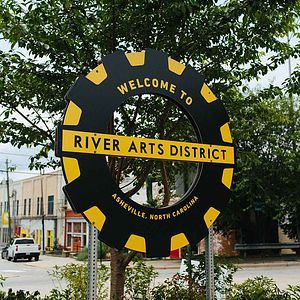
The River Arts District, affectionately known as the RAD, has transformed former industrial buildings into a vibrant community of artists, galleries, working studios, restaurants, and creative businesses.
Visitors can meet artists, explore galleries, discover murals, and experience Asheville’s creative spirit firsthand.
The district’s location along the French Broad is no coincidence. Historically, the river helped support the transportation, manufacturing, and commerce that shaped this part of Asheville.
Today, it provides a scenic backdrop to one of the city’s most engaging neighborhoods.
Walk or Bike Along the River
Asheville’s riverfront greenways offer another wonderful way to experience the French Broad.
The Wilma Dykeman Greenway connects visitors with river views, public art, and the River Arts District, while portions of the French Broad River Greenway offer opportunities for walking and cycling.
Following Hurricane Helene in September 2024, several riverfront parks and trails sustained extensive damage. Recovery and restoration continue, so visitors should check current conditions and closures before planning their outings.
The riverfront’s ongoing recovery is also a testament to the determination of Asheville’s residents, businesses, and community organizations.
Woodfin: A Riverfront Community Looking Ahead
Just north of Asheville, the French Broad continues through Woodfin.
This stretch of the river offers a different perspective, with wooded hillsides, residential neighborhoods, and riverfront spaces that connect the community to the water.
Woodfin is also part of the broader effort to improve public access and recreational opportunities along the French Broad.
For visitors, it’s another reminder that the river’s importance extends well beyond Asheville’s best-known attractions.
Marshall: A Historic Mountain Town Along the French Broad
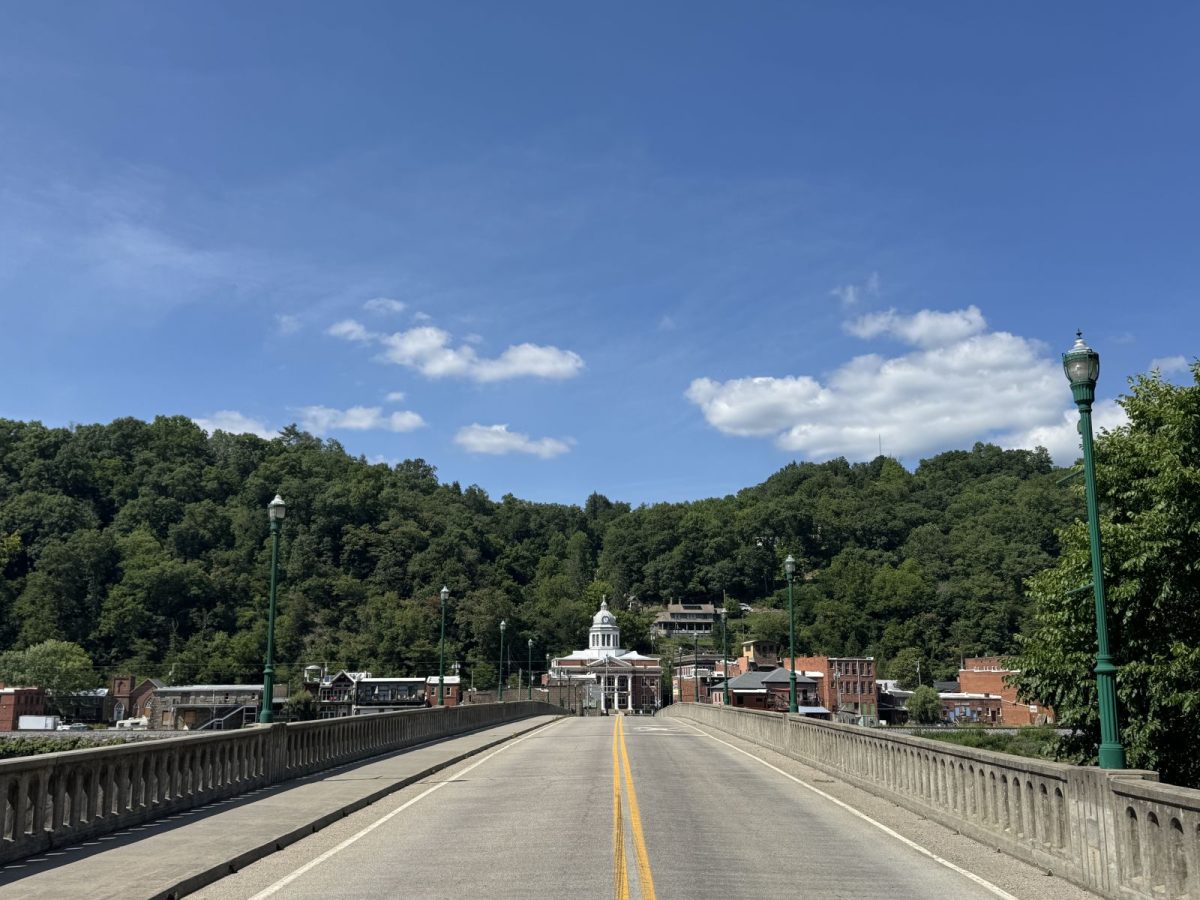
Farther north, the river reaches Marshall, the Madison County seat and one of Western North Carolina’s most distinctive small towns.
Set between steep mountain slopes, Marshall has a rich history closely tied to the French Broad.
Historic buildings line downtown streets, while the river flows alongside the community, providing a dramatic natural setting.
Marshall’s character is rooted in its history, local businesses, artistic traditions, and strong sense of community.
The town was among the communities severely affected by Hurricane Helene, and its recovery remains an important part of the region’s story.
Visitors can support Marshall by exploring businesses that have reopened, enjoying local restaurants, and discovering the area’s natural beauty.
Marshall is not simply another stop along the river. It is a community whose history and identity are inseparable from it. Have a look at our one-day Marshall itinerary! And if you’re interested in staying close to Marshall, here is Yonders Marshall Collection of Vacation Rentals
Hot Springs: Where Mountains, Trails, and River Adventures Meet
Our Western North Carolina river journey concludes in Hot Springs, a small mountain town near the Tennessee border.
Here, the French Broad flows through a dramatic landscape of forested mountains and narrow valleys.
Hot Springs is particularly well known for its connection to the Appalachian Trail, which passes directly through town.
The surrounding area offers hiking, scenic drives, river recreation, and opportunities to experience a quieter side of mountain life.
More adventurous visitors may be drawn to guided whitewater experiences, while others will appreciate the historic downtown and the beauty of the surrounding mountains.
From here, the French Broad continues into Tennessee, carrying the waters of Western North Carolina toward a much larger river system.
The French Broad River and Hurricane Helene
Any contemporary story about the French Broad River must acknowledge the devastating impact of Hurricane Helene in September 2024.
Record flooding transformed the river and caused extraordinary damage to communities, businesses, homes, parks, and infrastructure throughout Western North Carolina.
The river that had sustained generations of residents also became a powerful reminder of nature’s unpredictability.
In the years since, communities and conservation organizations have worked to remove debris, restore public access, improve infrastructure, and rebuild riverfront destinations.
That recovery is ongoing.
For visitors, supporting local businesses, respecting closures, and practicing responsible recreation are meaningful ways to contribute to the region’s continued recovery.
Protecting the French Broad for Future Generations
The French Broad River is an extraordinary natural resource, but its health requires continued attention.
Development, stormwater runoff, sediment, bacteria, and pollution all affect the river and its watershed.
Organizations such as RiverLink and MountainTrue work with communities, volunteers, and public agencies to improve water quality, restore riverbanks, promote conservation, and expand responsible recreational access.
Visitors can help by following Leave No Trace principles, properly disposing of waste, respecting wildlife, and staying informed about river conditions.
For paddlers, checking water levels, weather forecasts, access restrictions, and potential hazards is essential.
The French Broad is beautiful, but it is a living river—not a controlled recreational attraction.
Frequently Asked Questions About the French Broad River
Where does the French Broad River begin?
The French Broad River begins near Rosman, North Carolina, in Transylvania County, where its East and West Forks come together. From there, it flows north through Western North Carolina, passing Brevard, Asheville, Marshall, and Hot Springs before continuing into Tennessee.
Why does the French Broad River flow north?
The French Broad River flows north because of the natural slope and geological structure of the surrounding landscape. Although many rivers in the southeastern United States flow south or east toward the Atlantic Ocean, the French Broad follows a northward drainage route through the Appalachian Mountains toward the Tennessee River system.
Is the French Broad River one of the oldest rivers in the world?
The French Broad is widely described as one of the world’s oldest rivers, with some geological estimates suggesting an ancient drainage system dating back hundreds of millions of years. However, determining the precise age of a river is difficult, and these estimates should not be treated as definitively established.
How long is the French Broad River?
The French Broad River stretches approximately 215 to 220 miles from its headwaters near Rosman, North Carolina, to its confluence with the Holston River near Knoxville, Tennessee, where the two rivers form the Tennessee River.
Can you kayak or canoe on the French Broad River?
Yes! The French Broad River offers numerous opportunities for kayaking, canoeing, and guided paddling adventures. Popular areas include stretches near Rosman, Brevard, Asheville, and Hot Springs. River conditions, difficulty levels, and access vary significantly by location, so visitors should consult local outfitters and current river safety information before heading out.
Is it safe to swim in the French Broad River?
Water quality in the French Broad River varies depending on location, rainfall, runoff, and other environmental conditions. Swimming is not advisable during flooding, after heavy rainfall, or when water quality advisories are in effect. Visitors should check current water quality information from MountainTrue and local authorities before entering the river.
What towns does the French Broad River flow through in Western North Carolina?
The French Broad River connects several notable Western North Carolina communities, including Rosman, the Brevard area, Asheville, Woodfin, Marshall, and Hot Springs. Nearby destinations such as Hendersonville and Mills River also offer convenient access to the broader French Broad River corridor.
What are the best places to experience the French Broad River near Asheville?
Popular options include Asheville’s River Arts District, the Wilma Dykeman Greenway, designated sections of the French Broad River Greenway, and established public river access locations. Visitors can enjoy river views, walking, cycling, paddling, and nearby dining. Because Hurricane Helene affected several riverfront facilities, checking current access and reopening information before visiting is important.
How did Hurricane Helene affect the French Broad River?
Hurricane Helene brought devastating flooding to Western North Carolina in September 2024, damaging riverfront communities, parks, businesses, bridges, and recreational infrastructure. Restoration and recovery efforts have continued throughout the region, with local organizations and communities working to rebuild and improve river access.
Where can I stay while exploring the French Broad River?
Western North Carolina offers a variety of accommodations near the French Broad River, from mountain cabins and private retreats to luxury vacation homes. Yonder Luxury Vacation Rentals offers a curated collection of homes throughout the Asheville, Brevard, Hendersonville, and surrounding mountain areas, providing comfortable home bases for exploring the river and the Blue Ridge Mountains.
Experience the French Broad River With Yonder
One of the greatest pleasures of visiting Western North Carolina is discovering the places that give this region its distinctive character.
The French Broad River is certainly one of them.
From the quiet headwaters near Rosman to Asheville’s creative riverfront and the historic mountain communities of Madison County, the river connects landscapes, experiences, and generations of stories.
At Yonder Luxury Vacation Rentals, we believe the most memorable mountain getaways go beyond the home itself. They’re about exploring the communities, natural wonders, and local experiences that make Western North Carolina so special.
Whether you’re planning a family adventure, a romantic mountain escape, or a relaxing getaway with friends, our collection of luxury vacation homes provides a wonderful home base for discovering the French Broad River and the Blue Ridge Mountains.
Explore our collection of Western North Carolina vacation rentals and discover the Yonder way to experience the mountains.